
Hall County Previous Resident Sources
No single roll supplies a complete list of past residents. Hall County deeds establish title, Gainesville directories name listed adults and their occupations, census schedules show households, and maps stabilize an address when street presentation shifts. Start with the source closest to the date being studied, then connect it to the parcel's legal identity. The Hall County Clerk reports land and personal-property holdings from the county's 1818 founding, but that does not mean every old book or image can be opened online.
| Source | Years It Covers | Where Held | What It Shows |
|---|---|---|---|
| Hall deed and property books | 1818 to present custody | Clerk / GSCCCA | Owners, transfers, liens, and legal descriptions |
| Gainesville directories | Surviving editions, 1882 to 1960 | DLG / Hall County Library | Listed residents, occupations, and street addresses |
| Sanborn maps | Verified 1886 to 1922 editions | DLG / Library of Congress | House numbers, lots, footprints, use, and materials |
| Federal census | Decennial schedules through 1950 | NARA / library databases | Households and tenure in census context |
| Assessment and GIS | Current, with sales history | Hall qPublic / GIS | Owner, situs, parcel, map, and assessed features |
For a recent transfer, begin with Hall qPublic and the deed index. For an early twentieth-century household, begin with the directory nearest the date and test its house number against a Sanborn sheet. Census records fill household detail between editions, while probate and obituaries can explain why a name vanishes. These records describe different facts, so a title owner should not be called an occupant without another source.
Start With Hall County's Parcel
Enter the present street address in qPublic, then copy the parcel number, situs address, legal description, subdivision or lot reference, current owner, and sales history. Situs means the physical location of the land. The owner mailing address is where tax mail goes, and it may be elsewhere. That distinction is vital when researching previous residents because a remote mailing address does not identify a renter or prove that the owner moved.
The Hall County service maps page links the assessment search and GIS tools. In the GIS viewer, search the address, click the parcel polygon, and retain the map context. Lot and subdivision labels often survive changes to house numbers. If the property has only a Gainesville postal line, use GIS jurisdiction layers before looking for permits because the parcel may be outside incorporated Gainesville.
Note: qPublic updates weekly, deeds reflect recording events, and directory entries remain fixed snapshots of their publication dates.
Follow Hall County Owners Backward
The current parcel card supplies the first owner name and often a sales reference. Search the GSCCCA real-estate index with Hall selected. The statewide uniform index has a 1999 floor, while Hall's clerk-held books reach 1818. Earlier Hall coverage varies by book and product, so an empty online result is not the end of the previous-resident trail.
- Copy the parcel ID, legal description, current owner, and acquisition date from qPublic.
- Find that owner's acquisition deed as grantee, the party receiving title. Save the grantor, book and page, recording date, and prior-deed reference.
- Search the seller next as a grantee in an earlier date range. Match the same lot, plat, or legal description.
- Repeat the transfer sequence. Do not rely on the street number alone when a mill label, subdivision name, or postal geography changes.
- When images or index entries stop, ask the Real Estate Division for the general index and deed books at the courthouse.
- Grantor and grantee
- The grantor transfers an interest; the grantee receives it.
- Chain of title
- The linked sequence of recorded transfers for the same land.
- Legal description
- The land description based on lots, plats, bounds, or other fixed references, which can outlast a street address.
- Criss-cross directory
- A directory arranged by street or phone number rather than only by surname.
The clerk's Real Estate Division is at 225 Green Street SE in Gainesville and can be reached at 770-531-7058. Public terminal help and copies are the fallback for books not exposed through a subscription. Certified electronic copies may be ordered through GSCCCA eCert.
When Hall's Online Images Stop
Hall County's long record trail is an advantage, but access is split. A free limited GSCCCA account can search summaries without opening or printing images. Other products and page charges may apply. Before paying, note the book, page, instrument number, names, and date from every available index entry. Those citations let clerk staff locate the official book with less guesswork.
The courthouse is also where a chain can continue before the web index. Ask for the grantor and grantee general indexes covering the needed span, then move to the cited deed book. A prior-deed clause inside the instrument may jump directly to the older transfer. Plats and subdivision lot numbers help when the street address was not yet used.
Insider tip. If GSCCCA images end, continue with Hall County's courthouse indexes and books instead of treating the last web hit as the first owner.
Match Hall Residents Across Years
Deeds identify people with a recorded property interest. They do not name each member of a household. The digitized Gainesville directories supply the occupant layer for surviving editions between 1882 and 1960. Search a surname, open the scan, read that volume's abbreviation key, and copy the printed address and occupation. OCR is machine-made and may be wrong, so the page image controls.
- Choose the directory edition closest to the transfer or event date.
- Record the exact name, address, occupation, spouse notation, and home or residence marker.
- Check the next earlier and later surviving editions for moves or spelling changes.
- Pair the result with the 1900 through 1950 public census schedules when a matching decade exists.
- Use an enumeration district and nearby households if surname indexing fails.
The newest public federal population schedule in 2026 is 1950 because access follows a 72-year rule. The 1890 schedule gap makes Gainesville's 1882–83 directory and early maps especially useful. For more detail on the volumes themselves, their publishers, and entry keys, use the Hall County city directories collection page.
Anchor Old Gainesville House Numbers
Sanborn fire-insurance maps show blocks, house numbers, building footprints, construction materials, use, water features, and lot context. They do not name occupants. Compare the address printed in a directory with the nearest dated sheet, then connect the mapped lot to a deed description. The 1903 Gainesville Sanborn map has five sheets, and the 1915 Library of Congress atlas has fourteen.
The verified Gainesville editions include 1886, 1888, 1893, 1898, 1903, 1909, 1915, and 1922. The directory map for 1913–14 adds concentric one-eighth-mile circles, rail lines, and streetcar routes. That unusual scale helps translate an old ad or narrative direction into a modern parcel search.
Note: A map fixes an address in place and time, but a directory or census source is still needed to identify past residents.
Past Residents Beyond Downtown Gainesville
A narrow city search can miss a household that appeared under a mill community. Polk editions from 1952 and 1956 separately include Gainesville Mill and New Holland. The 1959 and 1960 volumes add Chicopee. Search those place labels as directory geographies, not just the modern street name.
Lake Lanier also altered Hall County's landscape after the 1950s. When an old road or tract appears to vanish, compare plats, deeds, historic maps, and directory labels before assuming the record belongs to another place. Postal Gainesville, incorporated Gainesville, and a Hall County parcel are not the same boundary. Stable parcel and legal-description details provide the bridge.
Hall Archives Complete the Household
Obituaries may connect married names, survivors, and later places. Probate records can identify a decedent, fiduciary, petitioner, case status, and sometimes heirs, subject to redaction. Hall Probate Court says most estate cases filed after 2010 appear in Georgia Probate Records; older files and official copies remain with the court.
Georgia Archives has an incomplete Gainesville municipal birth register from 1908 through 1911, plus county microfilm and book series. Historical newspapers and the DLG photo collections can add named people, buildings, and events. Each is a lead. Confirm its date and identity against the deed, directory, census, cemetery, or probate trail.
The surviving records are notable. Hall's clerk reports the property trail reaching the county's 1818 founding, even though courthouse buildings faced fires in 1851 and 1882 and the 1936 tornado. No wholesale record loss is established, but individual older series can have gaps. Verify book by book.
A current library initiative also matters for future research. The Georgia Public Library Service digitization program described new preservation work in 2025, including Hall County Library's Ray Lathem Postcard Collection and newspaper files.
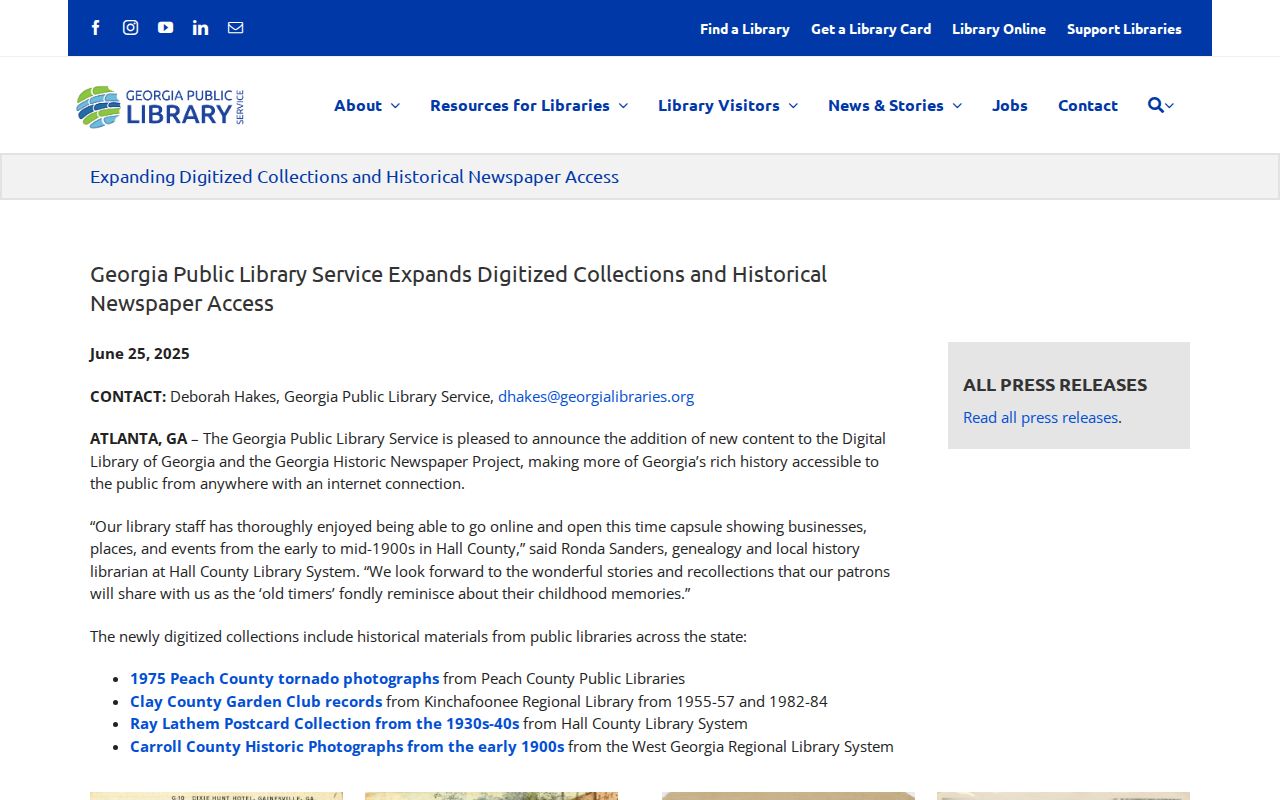
The captured page shows the official program behind added local digital sources that can place a Hall County property or family in historical context.
Close Hall Previous Resident Trails
When a former owner dies, follow the name into an obituary, cemetery record, probate docket, and any estate deed. A death certificate is controlled under Georgia law, while older archival death material follows transfer and access rules. The Georgia Archives death-record guide explains the historical coverage and the path to archived material.
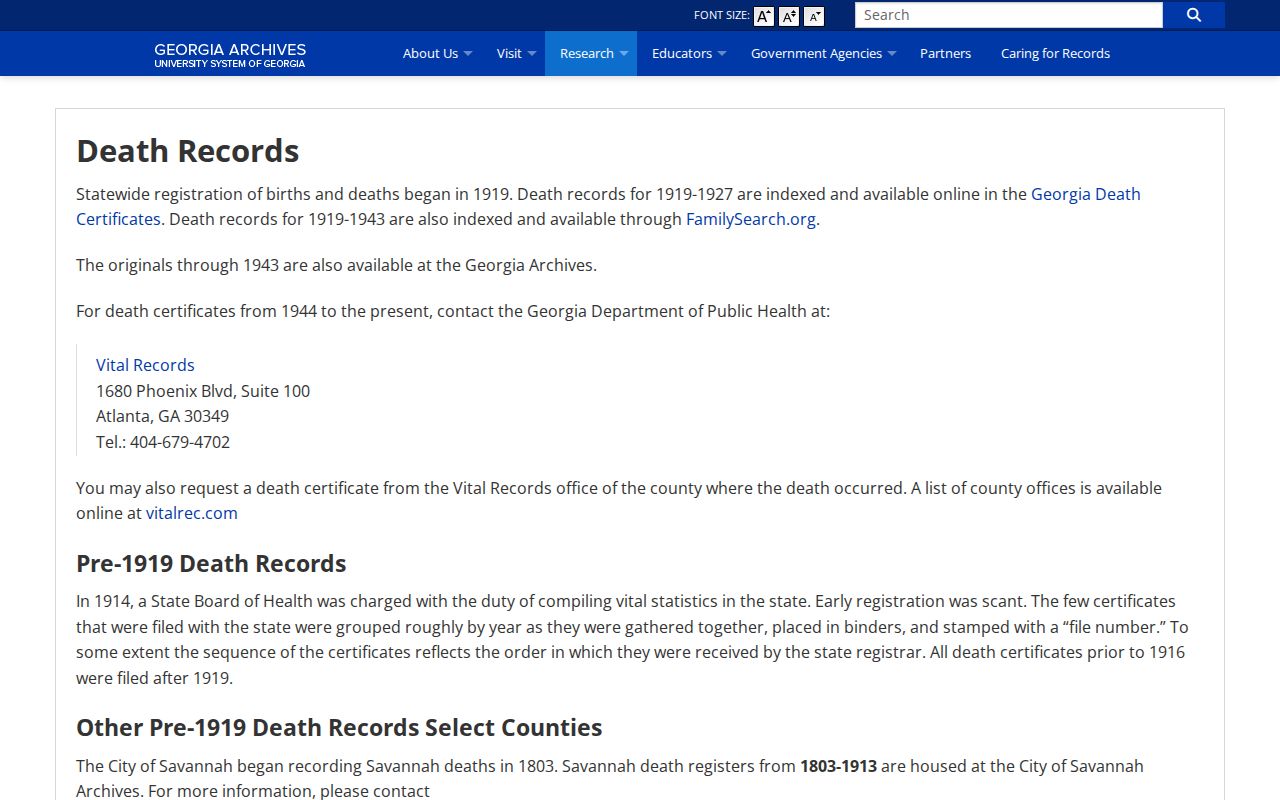
This official guide helps separate an archival index lead from a certified current record. Pair any match with Hall probate or deed evidence before connecting it to the address.
For a household present just before statewide registration, consult the Georgia Archives birth-record guide. It identifies Gainesville's rare, incomplete municipal register from 1908 through 1911.
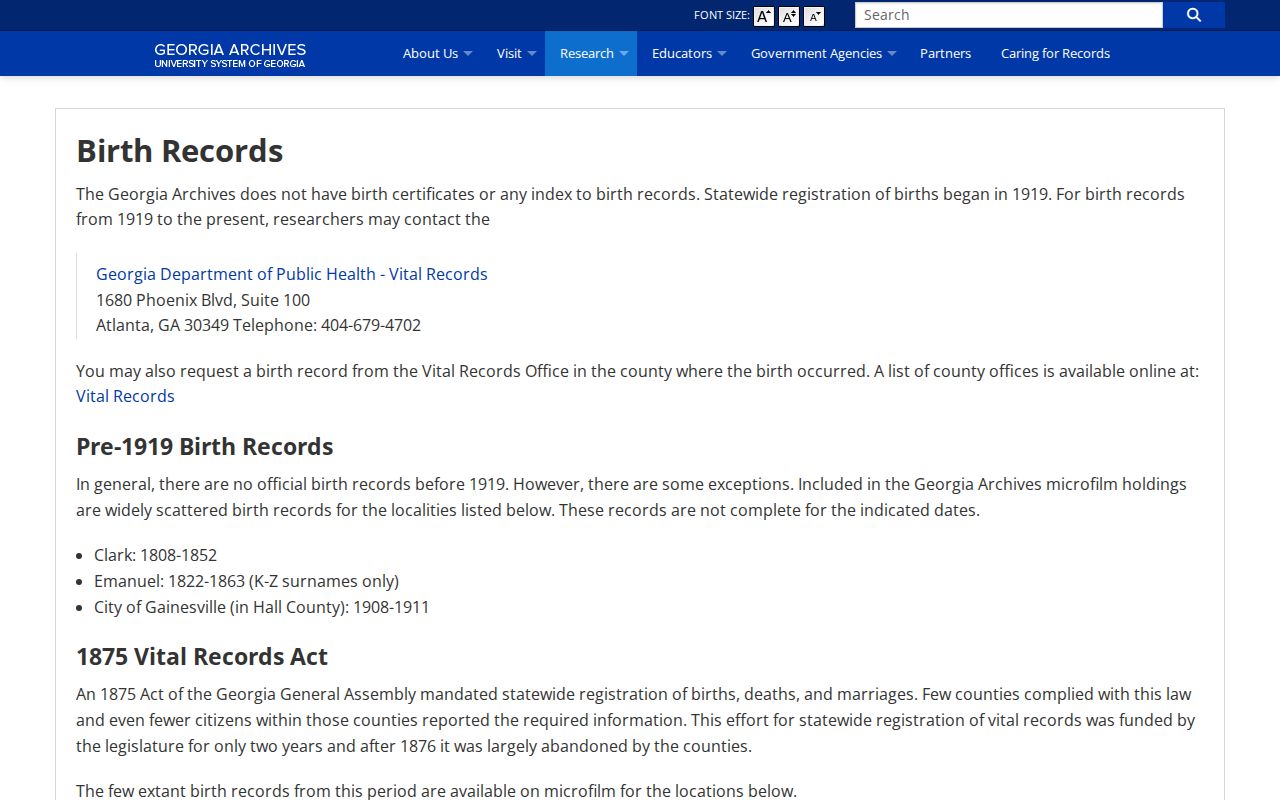
The register can link a child and parents to Gainesville during a narrow period, but its incompleteness means directories, census schedules, church material, and probate should confirm the family.
Use Hall Previous Residents Lawfully
House history and family research can reveal names tied to a private home. Use that information with care. Public ownership is not proof of current occupancy, and an old address is not permission to contact or track a living person. Hall records may also suppress online owner and address links for qualifying people under O.C.G.A. § 50-18-78.
Georgia Safe at Home provides substitute addresses for eligible survivors, and VoteSafe protects some voter addresses. Those limits are part of the record, not missing data to work around. Seek certified copies from the proper custodian when a legal or estate matter requires official proof.
Lawful use. Research Hall County previous residents for house history, genealogy, or an estate matter. Never use an address trail to stalk, harass, or harm anyone.