
Finding Hall County Residents
Start with the kind of fact already in hand. A street address points to the Hall County assessment roll and GIS map. A full name belongs first in an official index that matches the likely event, such as a deed, court case, probate matter, or business filing. An older Gainesville address calls for the Hall County Library System's digitized directory shelf. Each source answers a narrow question. None is a complete list of every adult or household.
The strongest match joins two independent facts. Compare a middle initial, spouse, parcel number, legal description, date, or occupation before joining records. A tax-roll mailing address is not the same as the parcel's physical, or situs, address. A deed names title parties, not all occupants. That care is vital when common surnames produce several Hall County residents directory results.
- Search the assessor by owner or location address and record the parcel identifier.
- Check the relevant official name index, such as the court docket, probate docket, or deed index.
- Compare dates, roles, addresses, and stable identifiers across at least two sources.
- Use Gainesville directories and census schedules when the question reaches into the past.
- Ask the correct custodian for an existing record when the online trail ends.
Hall County Directory Custodians
Hall County divides resident records among several offices. The Clerk of Superior and State Courts keeps trial-court files, deeds, liens, plats, trade names, and personal-property records. Probate Court handles estates, guardianships, and marriage records. The Board of Assessors publishes the current parcel roll, while Elections maintains voter registration for Hall County and its municipalities. Gainesville keeps its own city court, permit, and municipal files, so a county request cannot replace a city request.
The full address route belongs in the Hall County street directory. Send each request to the office that created the record, not merely to the government named in the mailing address.
Hall County Property Roll
The assessor is often the quickest way to connect a Hall County address with a titled owner. The Hall qPublic Parcel and Assessment Search supports owner, location address, and parcel-number approaches. A parcel card can show the owner's mailing address, situs address, legal description, subdivision or lot references, value components, sales history, building facts, exemptions, and a map link. Hall's GIS page says the data updates weekly.
| Search mode | Best input | Record to capture |
|---|---|---|
| Owner Name | Surname and variants | Owner form and parcel ID |
| Location Address | Street number and name | Situs and legal description |
| Parcel Number | Tax notice or GIS ID | Exact parcel card |
| Map | Selected parcel | Adjacent parcels and layers |
The Hall Tax Assessors service page leads back to the office behind the roll.
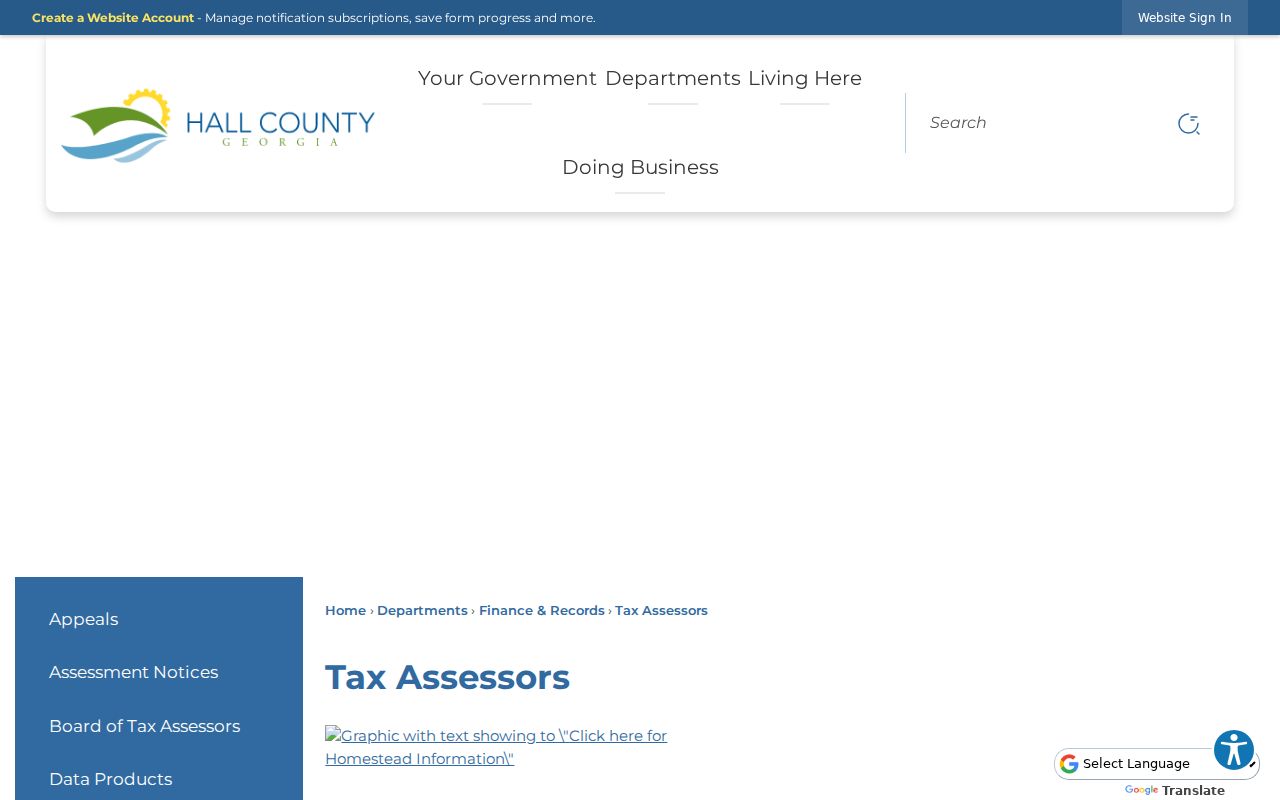
This source provides the official contact route when a parcel result needs explanation or correction. Ownership is not proof of occupancy. A mailing address can differ from situs for many reasons, and an exemption is not a full household list.
Note: qPublic's weekly cycle, a deed's recording date, and a directory edition represent three different points in time.
Hall Deeds Reach to 1818
The Hall Clerk says land and personal-property holdings date to the county's founding in 1818. The GSCCCA index searches recorded instruments by county, party name, instrument type, book and page, file number, and recording-date range. Its uniform statewide real-estate index begins in 1999, while older Hall books reach much farther back. Exact online image coverage before 1999 is not officially stated.
- Index
- A finding list that points to a record.
- Parcel
- A mapped unit of land with a stable local identifier.
- Grantor and grantee
- The party giving an interest and the party receiving it.
- Certified copy
- A copy authenticated by the record custodian.
When an image is missing, note the book, page, instrument number, and parties. Then use the Real Estate Division's public counter or request a copy. Certified electronic copies may be ordered through eCert. A free limited GSCCCA account can search summaries but cannot view or print images; product charges should be checked at use time.
County history reports fires in 1851 and 1882, when residents saved historic records and valuables. The 1936 tornado damaged the courthouse and city-hall district. Those events do not prove every series is complete, so inspect each book rather than assuming a continuous digital run.
Current Hall County Resident Rolls
Modern Hall County residents directory work compares limited official rolls. Choose the roll whose purpose fits the question, then confirm the result elsewhere. Commercial people-finder products may combine old public and commercial data, but records can be stale or merge names. Official sources reveal their custodian, update pattern, and copy route.
| Official source | What it establishes | Access | Main limit |
|---|---|---|---|
| qPublic roll | Titled owner, parcel, mailing and situs | Free web search | Not a household roll |
| Hall court docket | Party, role, case, date, status | Public index | Restricted files absent |
| GSCCCA deed index | Recorded property parties and events | Account and counter | Title does not prove occupancy |
| My Voter Page | One voter's registration and districts | Identity-based lookup | Not browsable by street |
| SOS business search | Entity, agent, status, filings | Free basic index | Business address may not be a home |
For one-person research, narrow the name with dates, roles, and a stable identifier before comparing it with another official index.
Hall Court Names Need Context
The Hall Superior and State Courts docket accepts a party name or case number and may allow court, case type, and date filters. A typical result identifies the case number, division, case type, filing date, parties and roles, docket events, attorneys, and status where entered. It is a lead, not a certified disposition. Adoption, juvenile, sealed, and other restricted material will not appear.
Search spelling variants and preserve suffixes or middle initials. Compare the case date, role, court, attorney, and any lawful address reference with a separate record. Hall Probate Court uses Georgia Probate Records for most estate cases filed after 2010. Gainesville Municipal Court has a request route but no verified public name-browse.
The Hall Probate Court overview leads to estate, guardianship, and marriage access.
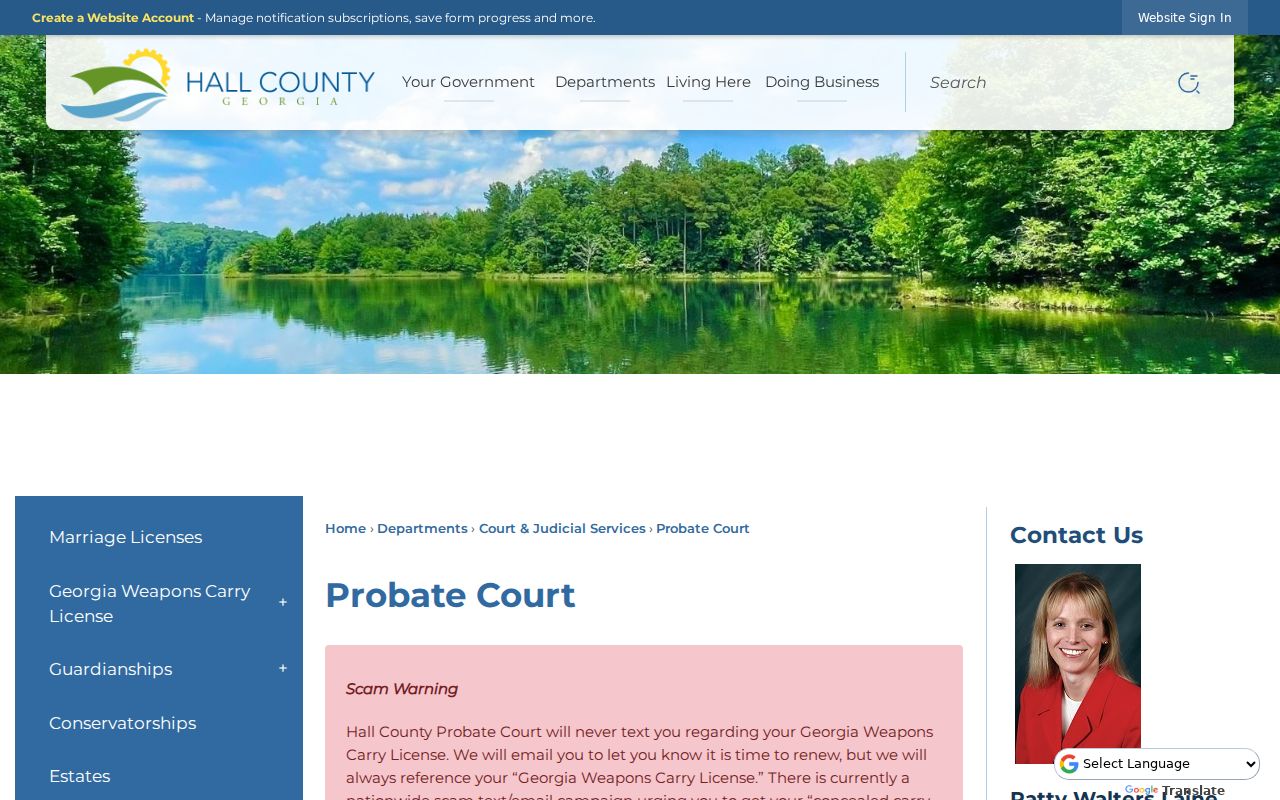
This source separates probate records from the Superior and State Court docket kept by the clerk.
Hall Voter Lookup Boundaries
Hall Elections maintains registration for the county and every municipality. Georgia's My Voter Page is an individualized tool that asks for a name, Hall County selection, and date of birth. A match can show status, polling place, precinct, districts, elected officials, sample ballot, and absentee tools. It never reveals ballot choices, and it cannot browse every voter on a road.
The My Voter Page form shows the identification route used for a personal registration check.
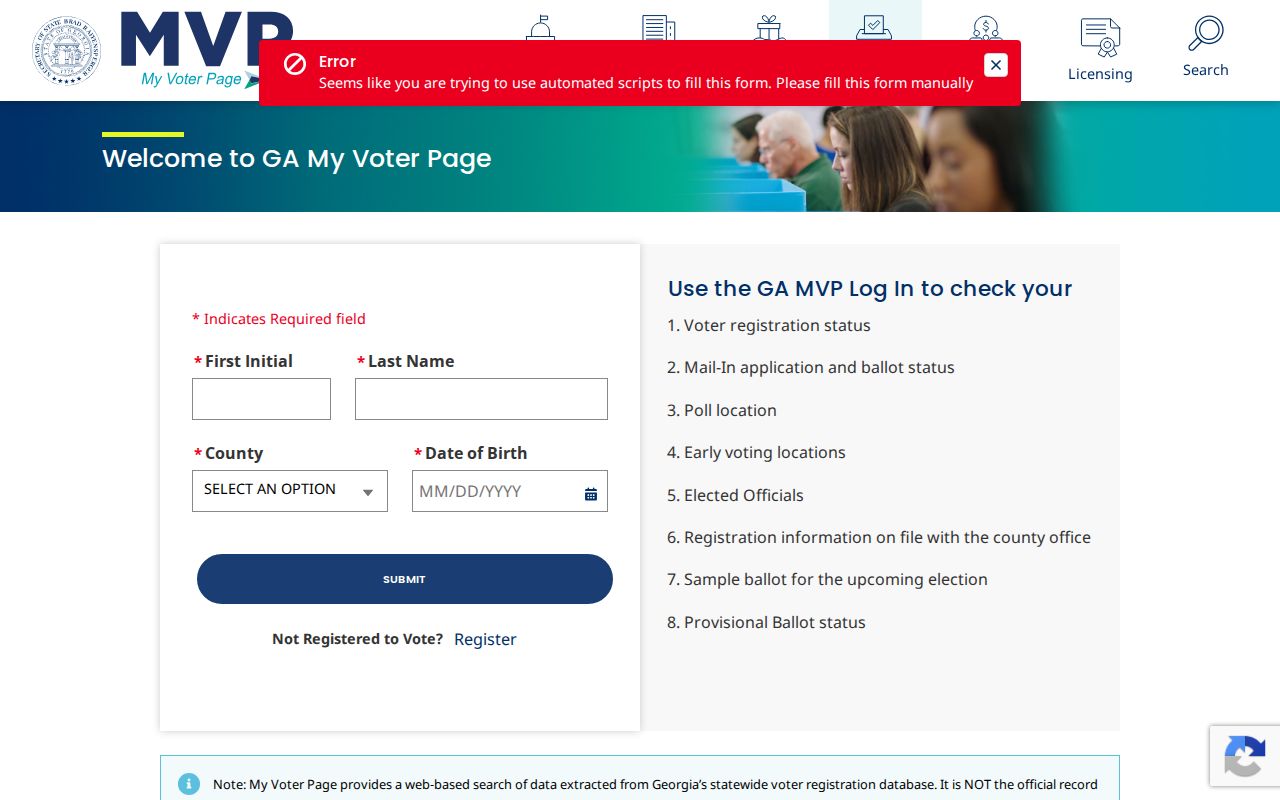
The form's limits matter. An unsuccessful search is not proof that a Hall County resident moved or is unregistered. Georgia regulates public voter files under O.C.G.A. § 21-2-225. Hall links to official ordering, which supplies defined products and omits protected data. Georgia does not register voters by political party.
As of August 1, 2026, Hall Elections reported 157,466 registered voters, 31 precincts, and more than 500 poll workers. Those figures show why an individual identity check and a regulated list order are distinct tasks.
Hall Vital Records Access
Birth, death, marriage, and divorce records do not form an open Hall County residents directory. Georgia DPH and O.C.G.A. §§ 31-10-25 and 31-10-26 restrict current certificates and require identity or a qualifying relationship. Hall County Vital Records handles local birth and death certificates. Probate Court supplies marriage copies, and Superior Court keeps divorce files.
Discovery and proof are separate. A docket, obituary, directory entry, or archival register may point to an event, but it is not the certified certificate. Hall's marriage form asks for both parties' names, date and place of marriage, requester contact and signature, identification, payment, and a return envelope. Each requested certificate or application copy is listed at $10.
Gainesville has an unusual historical exception. Georgia Archives holds an incomplete municipal birth register for 1908 through 1911, before regular statewide registration began in 1919. Pair that lead with census, probate, church, or directory evidence instead of treating it as complete.
Gainesville Postal Lines Mislead
A Gainesville mailing address may sit outside incorporated Gainesville. That distinction changes which office keeps permits, code files, and some court records. South Hall growth near Flowery Branch and Oakwood, north Hall communities near Clermont and Lula, eastern Gillsville, and Lake Lanier shoreline development make postal labels poor jurisdiction tests.
Use Hall GIS layers to establish parcel and municipal context before filing a request. Hall County handles permits in unincorporated territory, while each municipality controls its own work. The address remains useful, but the parcel ID, city boundary, and legal description are safer routing facts.
Note: Mailing city, incorporated city, and county parcel jurisdiction can describe three different geographies for the same Hall County address.
Hall Records Requests Changed
The Georgia Open Records Act, O.C.G.A. §§ 50-18-70 through 50-18-77, lets any person request an existing public record without special wording. The custodian must respond within three business days by producing available records or stating when they can be produced and what they are expected to cost. An agency need not create a new resident list or custom report.
Most Hall department requests moved to NextRequest on July 1, 2026. Elections, Environmental Health, the Sheriff's Office, and the court system still use separate channels. A useful request names the office, record type, person or address, and a narrow date range. Hall provides the first 15 minutes of labor without charge; later retrieval, redaction, and copies may cost more.
The county's open-records request page identifies the right channel.
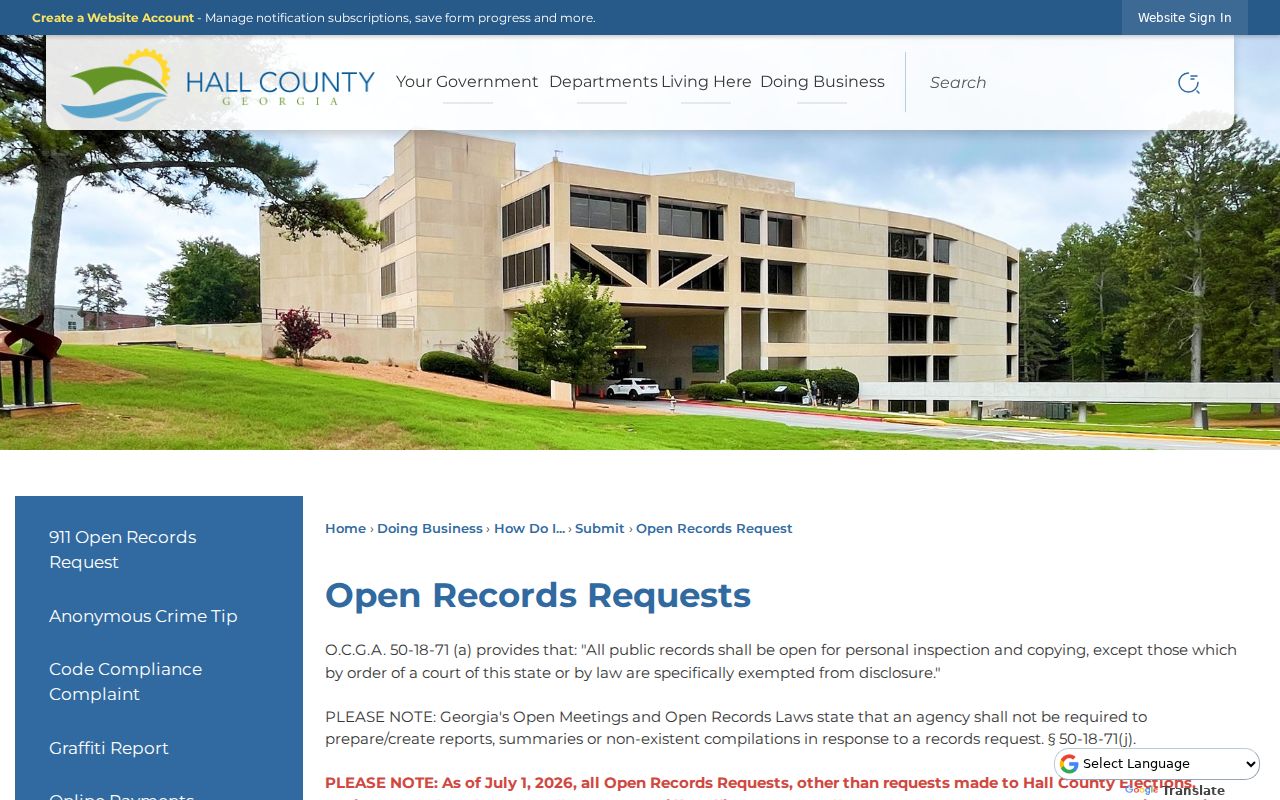
This routing screen is the fallback when a Hall County record exists but has no public name or address index.
Hall Filing Alerts Are Free
Hall County and GSCCCA announced the Filing Activity Notification System, or FANS, on March 25, 2026. Owners can opt in for electronic notice when filings appear under selected names or records. The service is free and voluntary, and alerts are not guaranteed complete or accurate. It prompts inspection of the official filing, but does not replace the deed index.
The official Hall FANS announcement explains the signup and warning.
The notice also helps residents distinguish the county's no-cost alert from paid property-fraud solicitations.
Historical Hall County Directories
The Hall County Library System and Digital Library of Georgia provide searchable Gainesville city directory editions spanning 1882 through 1960. The run is not annual. Confirmed editions include 1882-83, 1911-12, 1913-14, 1918, several 1920s through 1940s volumes, and Polk editions from the 1950s through 1960. Entries can list a name, occupation, spouse, employer, home address, and abbreviations defined by that edition.
Search the OCR text, then inspect the scanned page. Machine text can misread names and street numbers. Later Polk volumes separately include Gainesville Mill, New Holland, and Chicopee. A person absent from a narrow Gainesville search may appear under a mill community. The full shelf is covered in the Hall County city directory collection.
The Hall County Library System remains the local entry point for directories, newspapers, yearbooks, family histories, and staff help.

The library route matters when a digitized edition, reverse directory, or local newspaper cannot be found with an ordinary web search.
Protecting Hall County Addresses
Some public-facing address links are withheld by law. Georgia Safe at Home, codified at O.C.G.A. § 50-18-150 et seq., provides a substitute mailing address for qualifying survivors. VoteSafe protects qualifying voter-address information. Hall County also publishes a sworn form under O.C.G.A. § 50-18-78 for certain protected officials and workers to suppress the online connection between a name and property address.
Suppression changes what an online search displays. It does not erase an otherwise public deed. Factual errors should go to the custodian that maintains the record, while sealing, restriction, and redaction depend on the law for that series. Commercial directory removal is separate and may need to be repeated as data reappears.